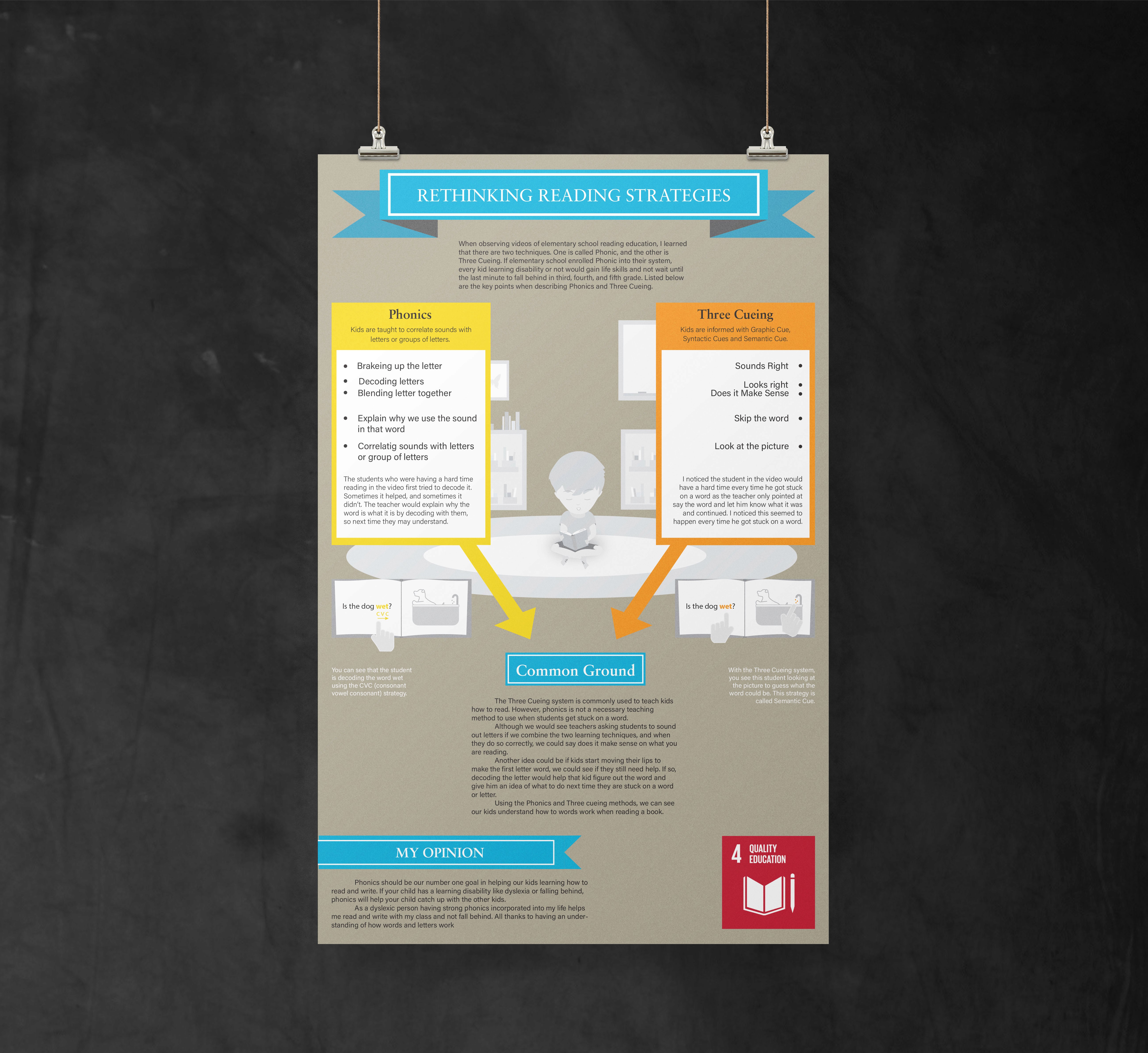
Dis-lex-i-a
A typographic exploration focused on visualizing dyslexia through design.
.comic book
problem
The challenge was to represent the experience of dyslexia in a way that is both visually engaging and easy to understand.
solution
I used experimental typography, layout, and visual distortion to simulate the feeling of reading with dyslexia while maintaining clarity.

This project challenged me to use design as a tool for education and empathy rather than simply creating something visually appealing. By combining expressive typography with intentional layout choices, I explored how design can communicate experiences that are often difficult to describe with words alone.
The final piece demonstrates how graphic design can raise awareness and encourage conversation about accessibility. It reflects my belief that thoughtful design has the power to educate, foster understanding, and create meaningful connections between people and ideas.
year
2021
role
Graphic Designer
tools
Adobe Creative Cloud
category
Visual Design
.draft one
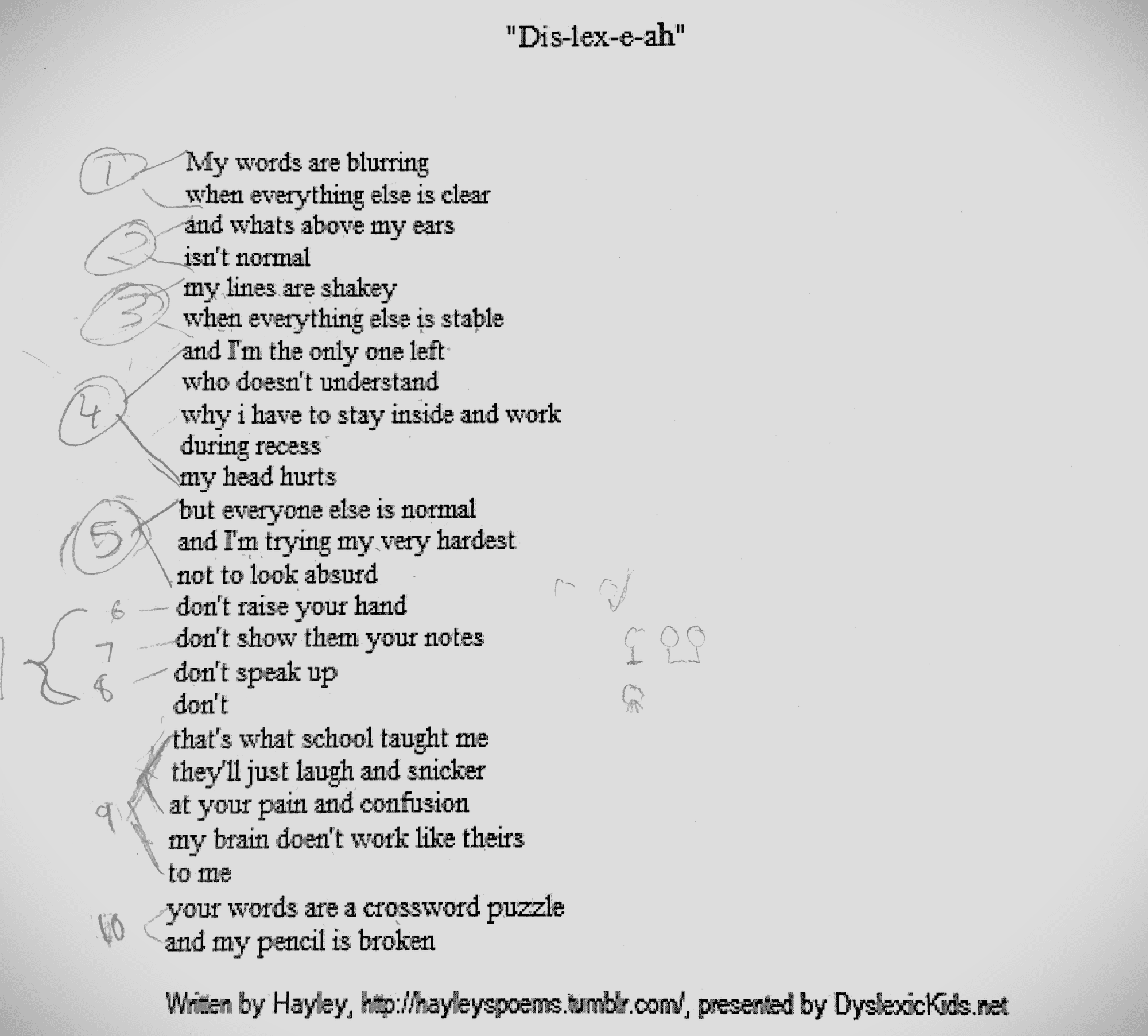
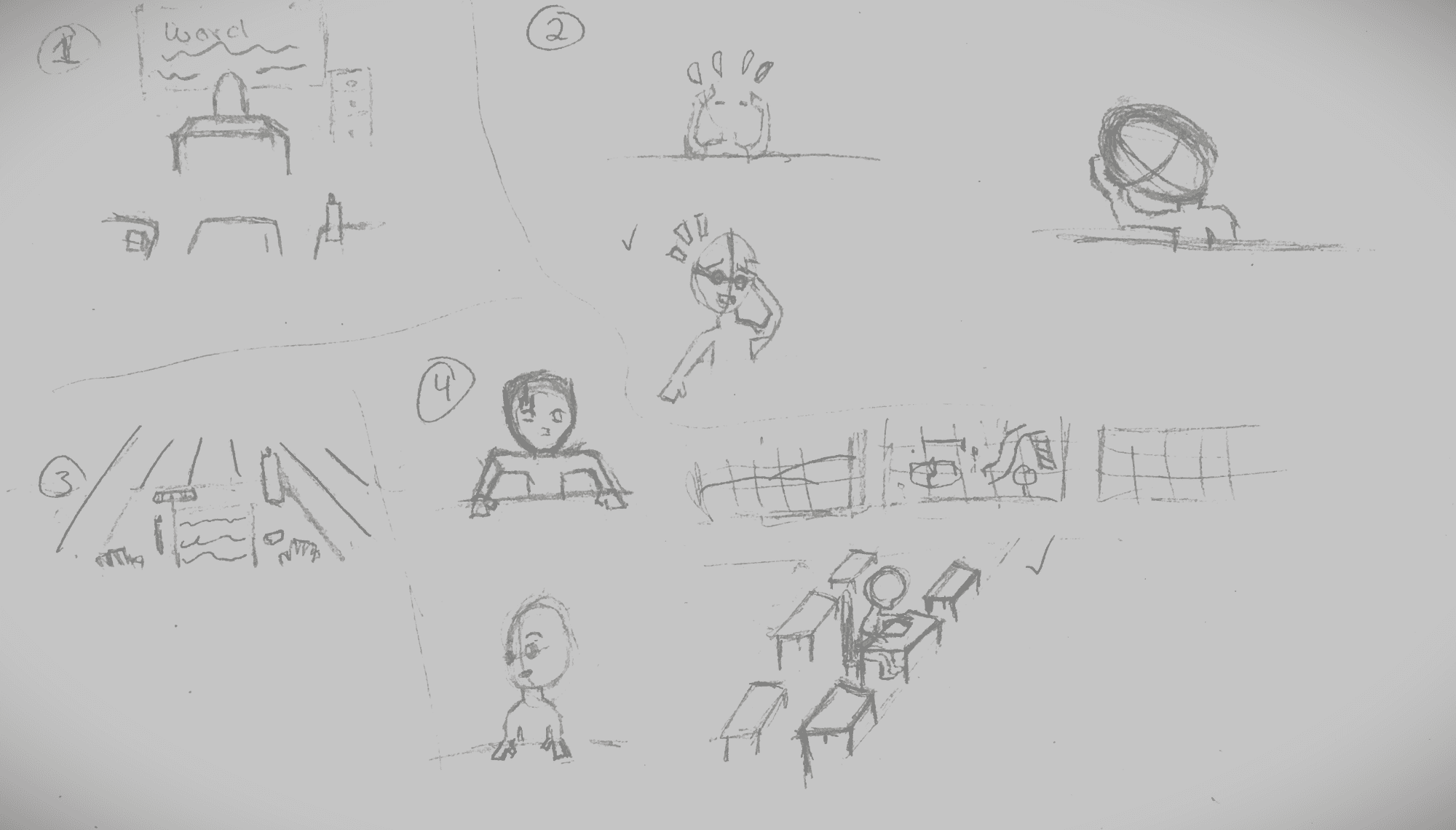
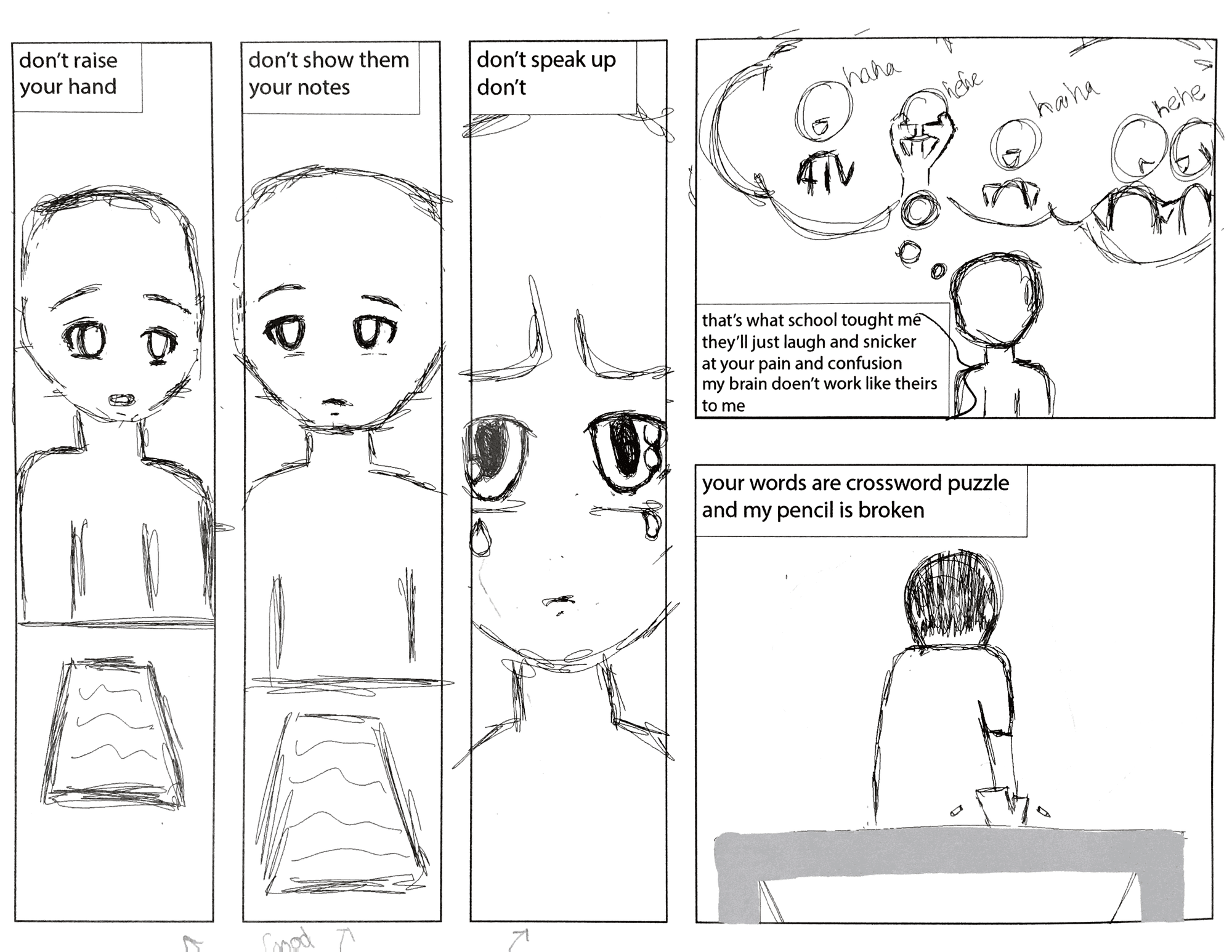
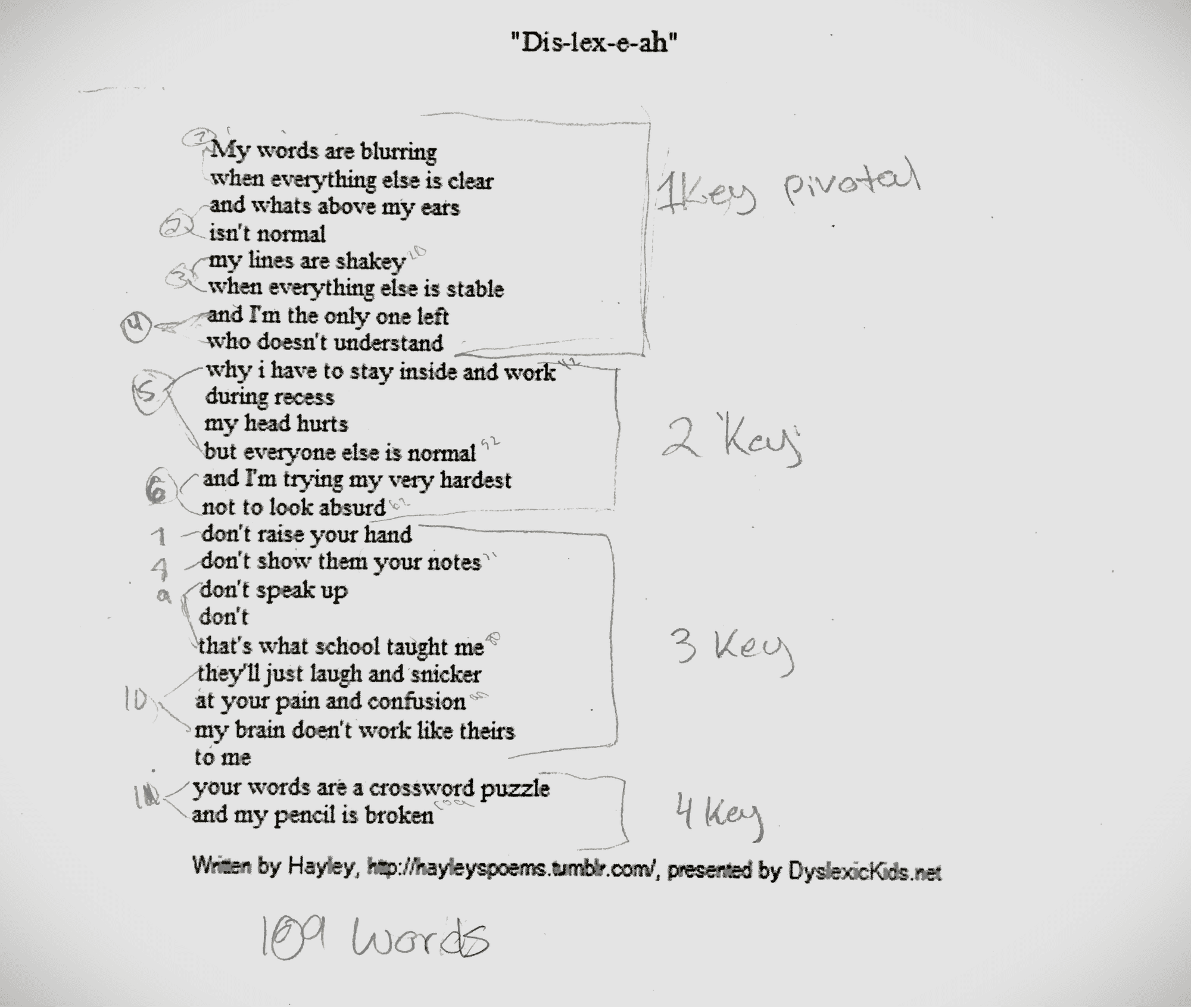
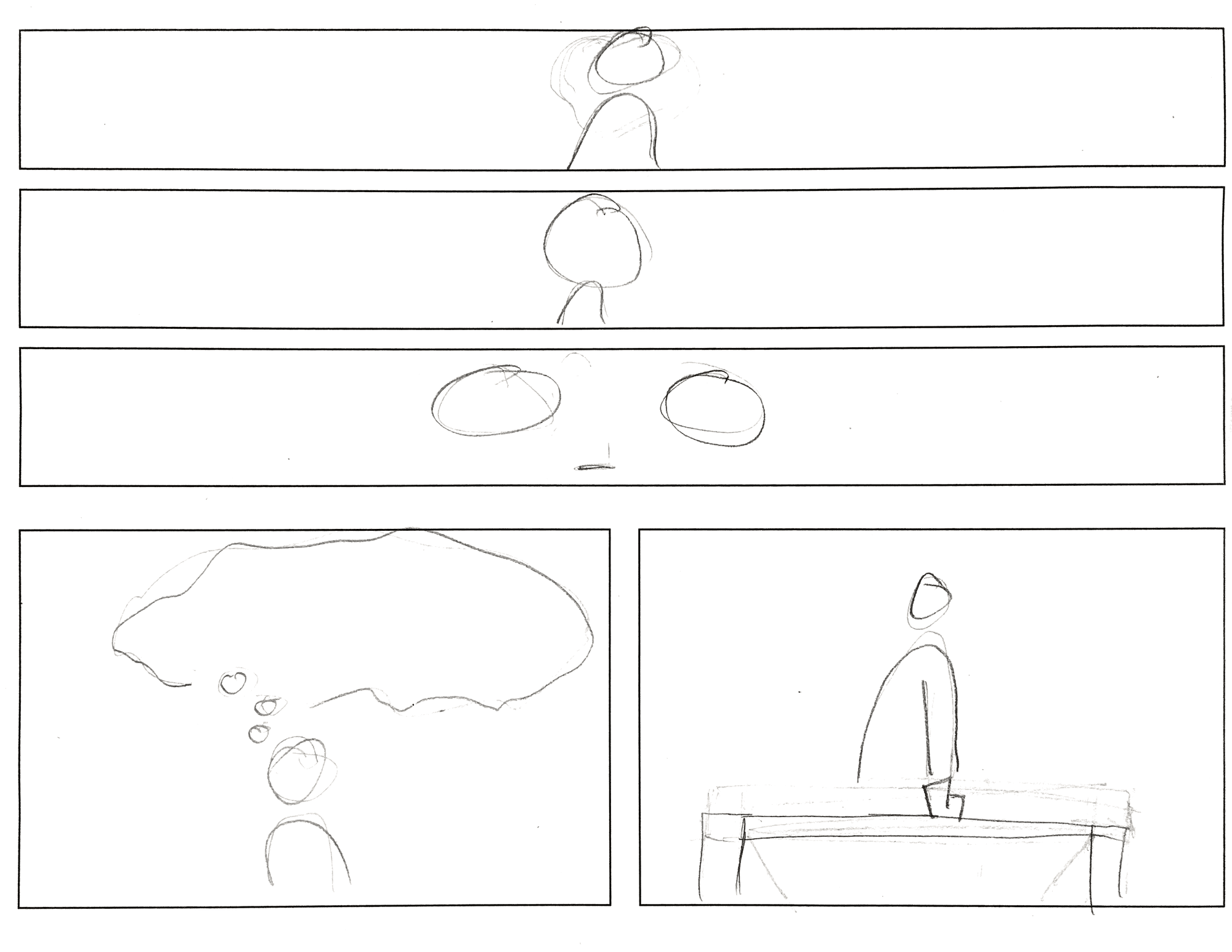
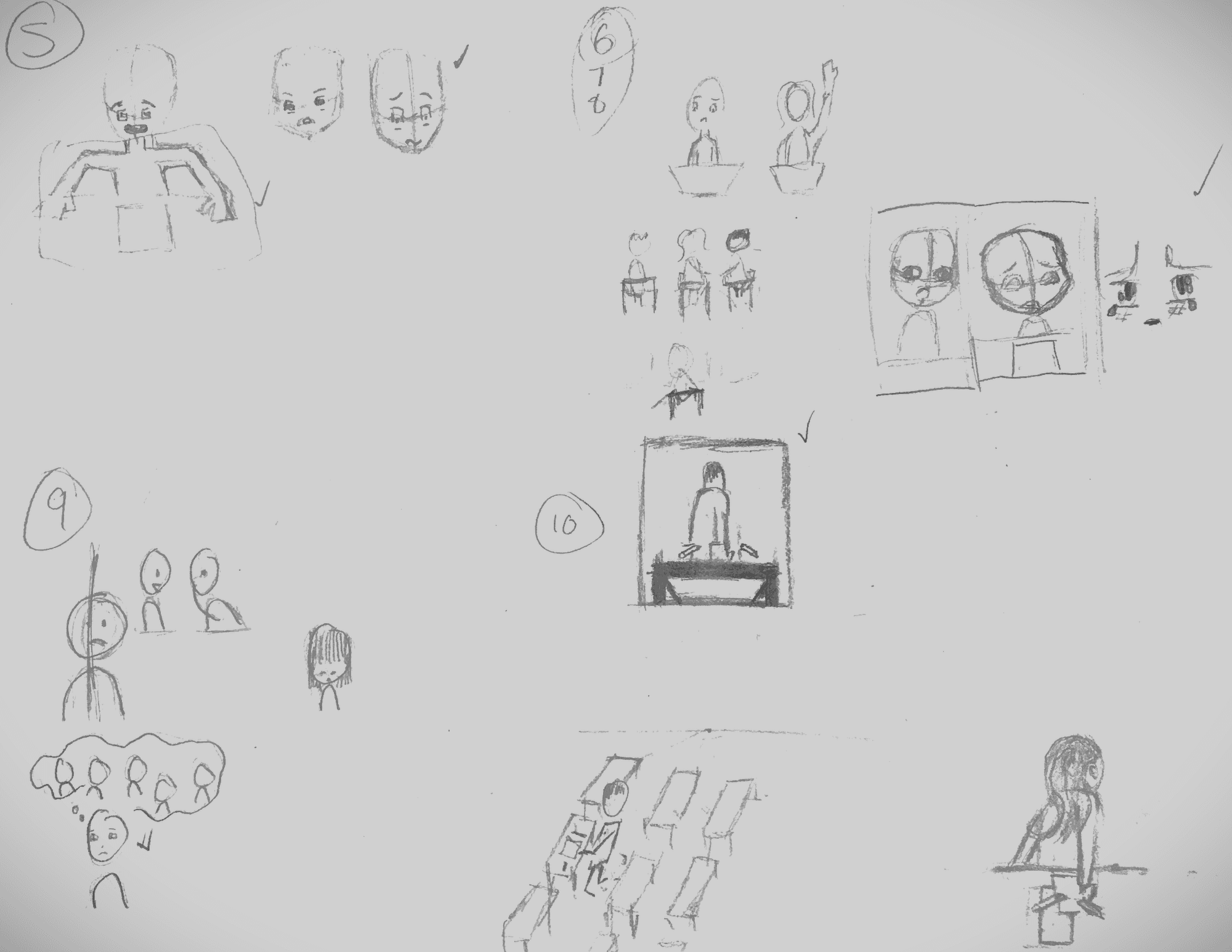
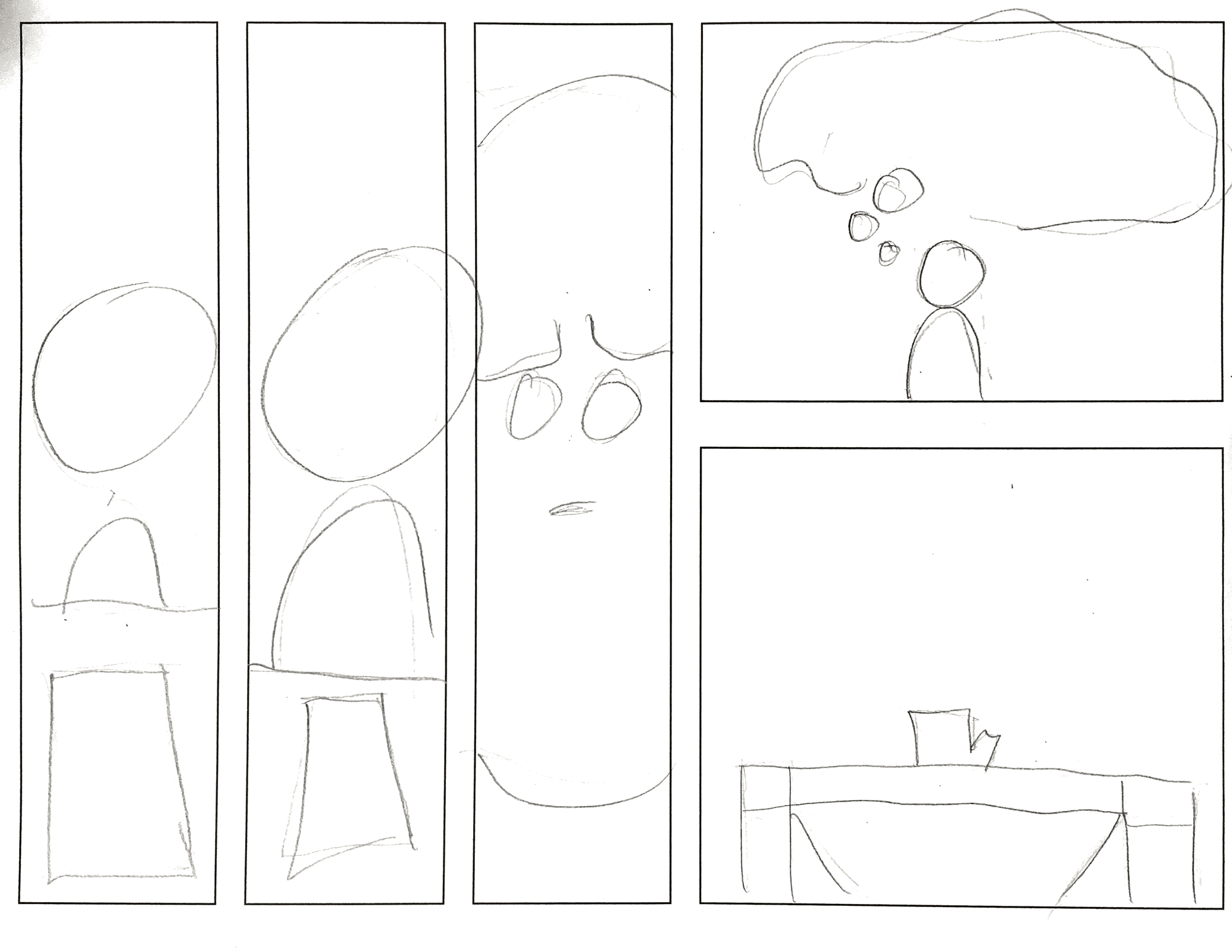
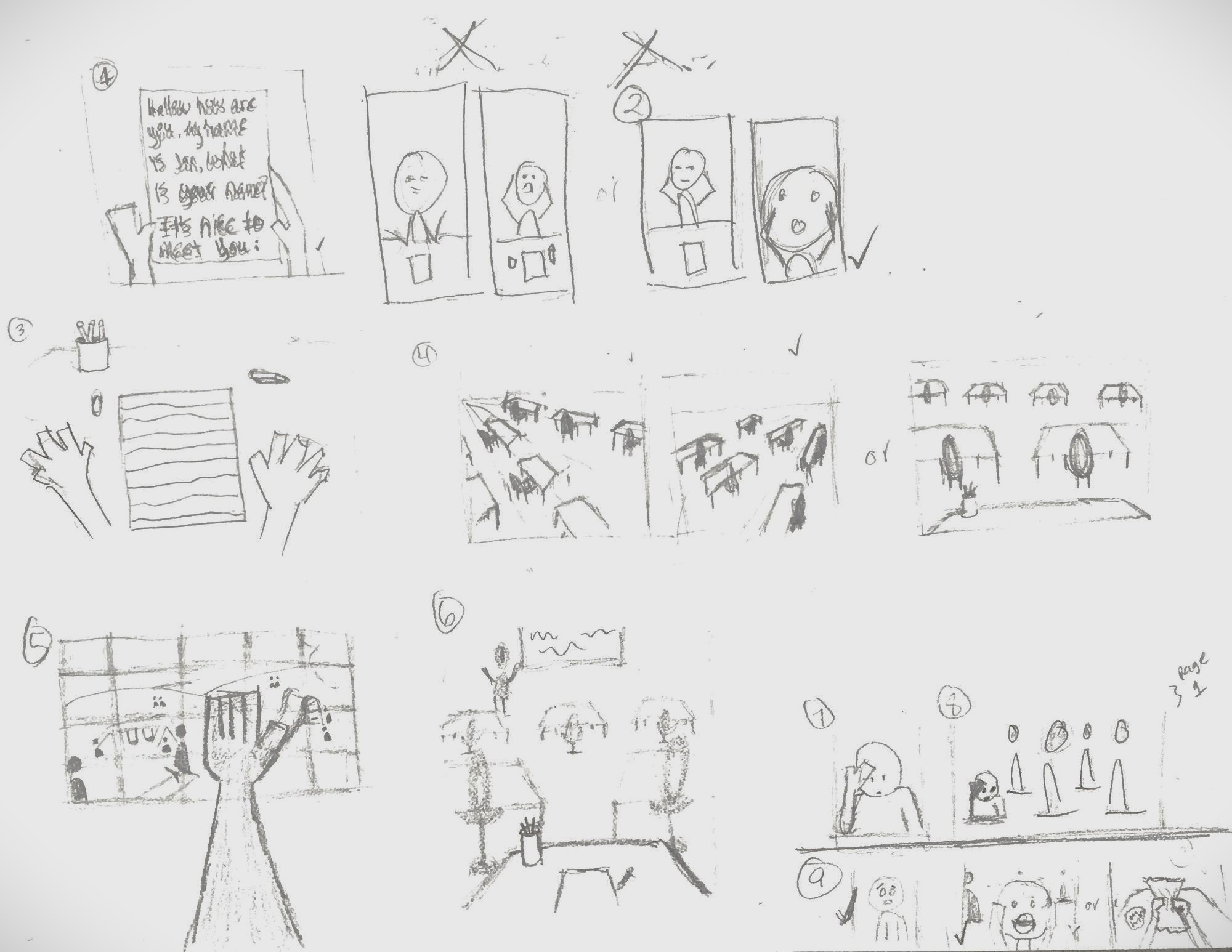
Early exploration of typographic distortion and layout experimentation.
The first rough draft focused on exploring how the poem could be translated into a visual narrative through typography, sketching, and layout experimentation. I began by breaking down emotional themes within the poem and developing storyboard-style compositions that reflected confusion, isolation, and frustration often associated with dyslexia. Through loose sketches and early panel structures, I experimented with pacing, distorted typography, and visual hierarchy to discover how text and imagery could work together to communicate both emotion and reading difficulty.
.draft two
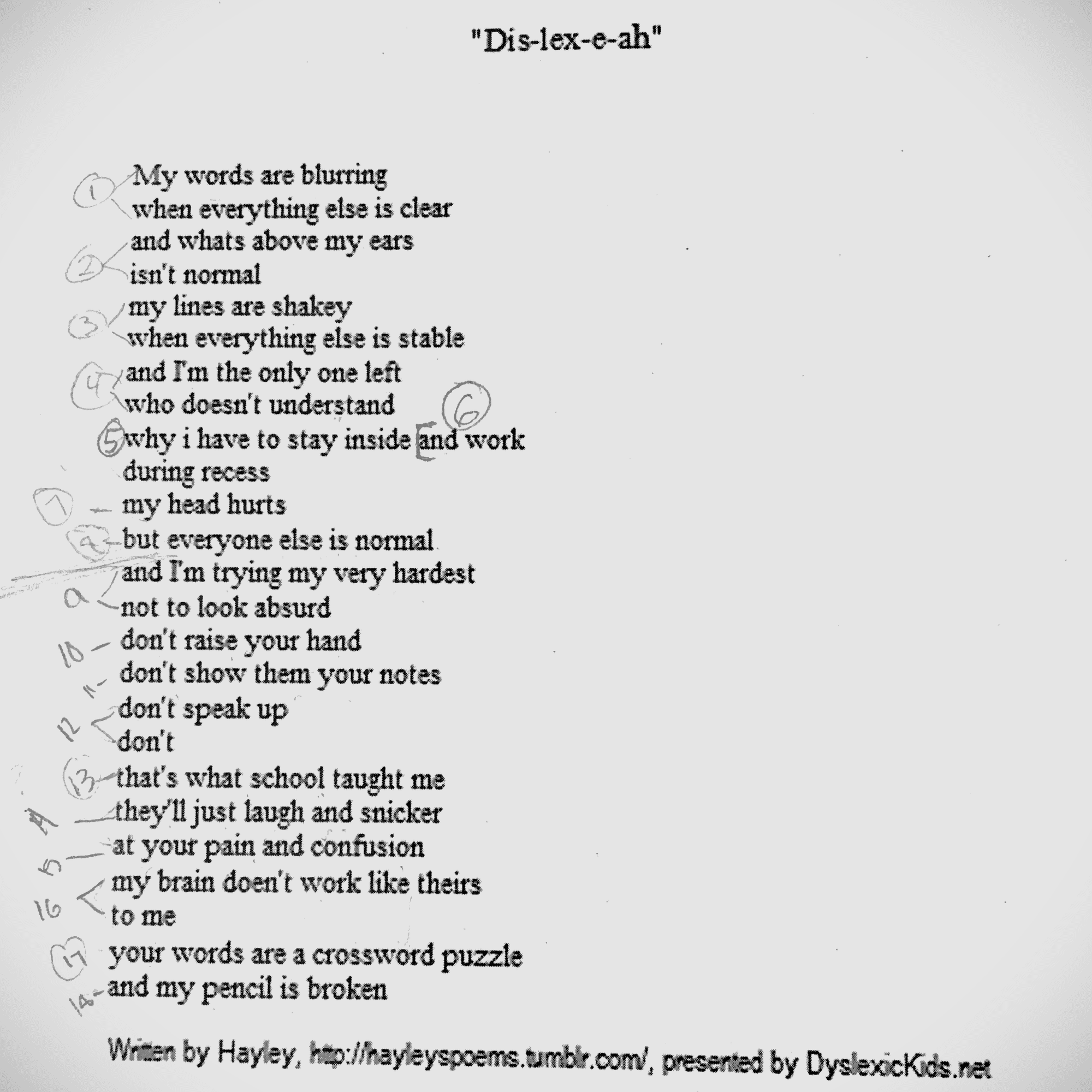
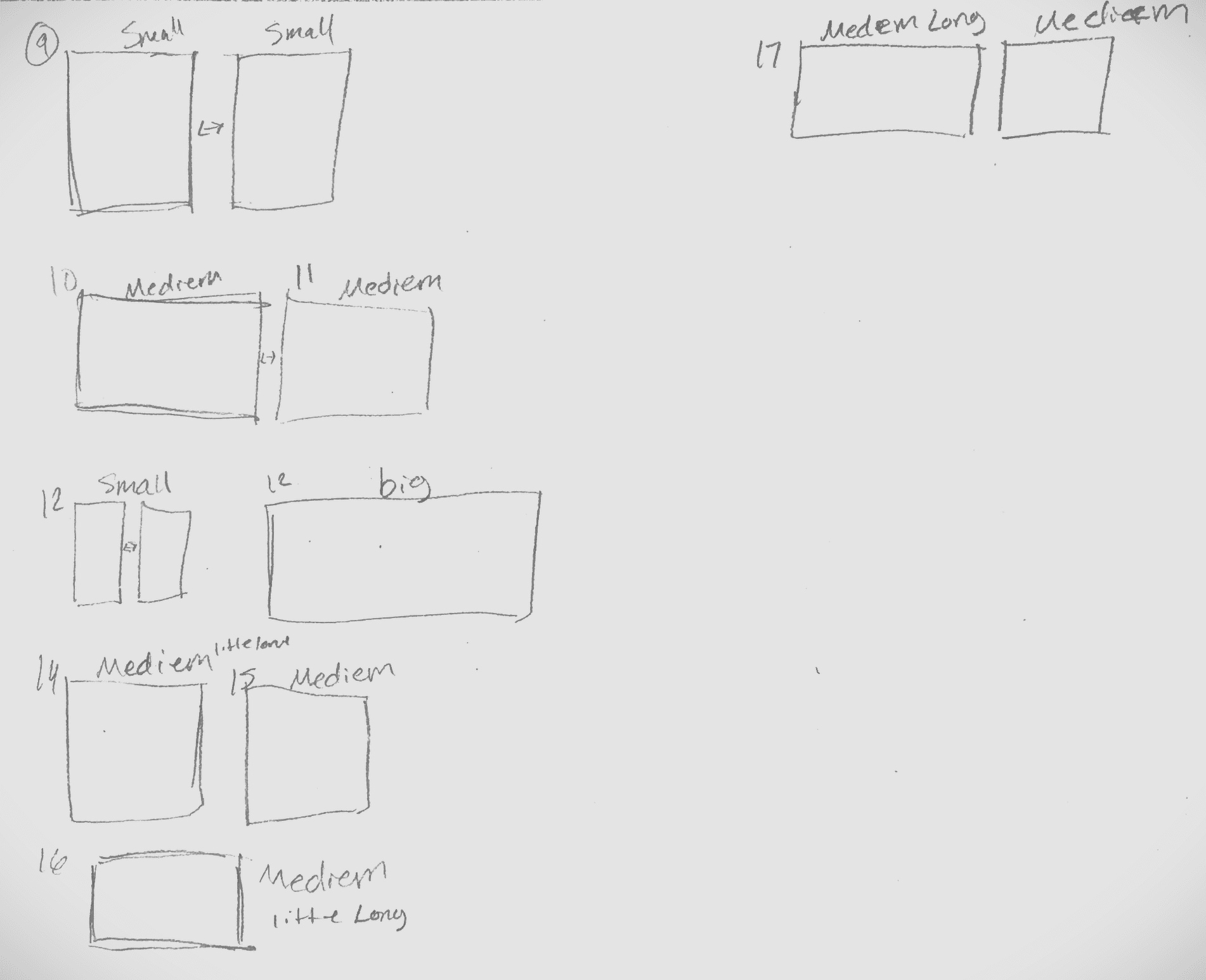
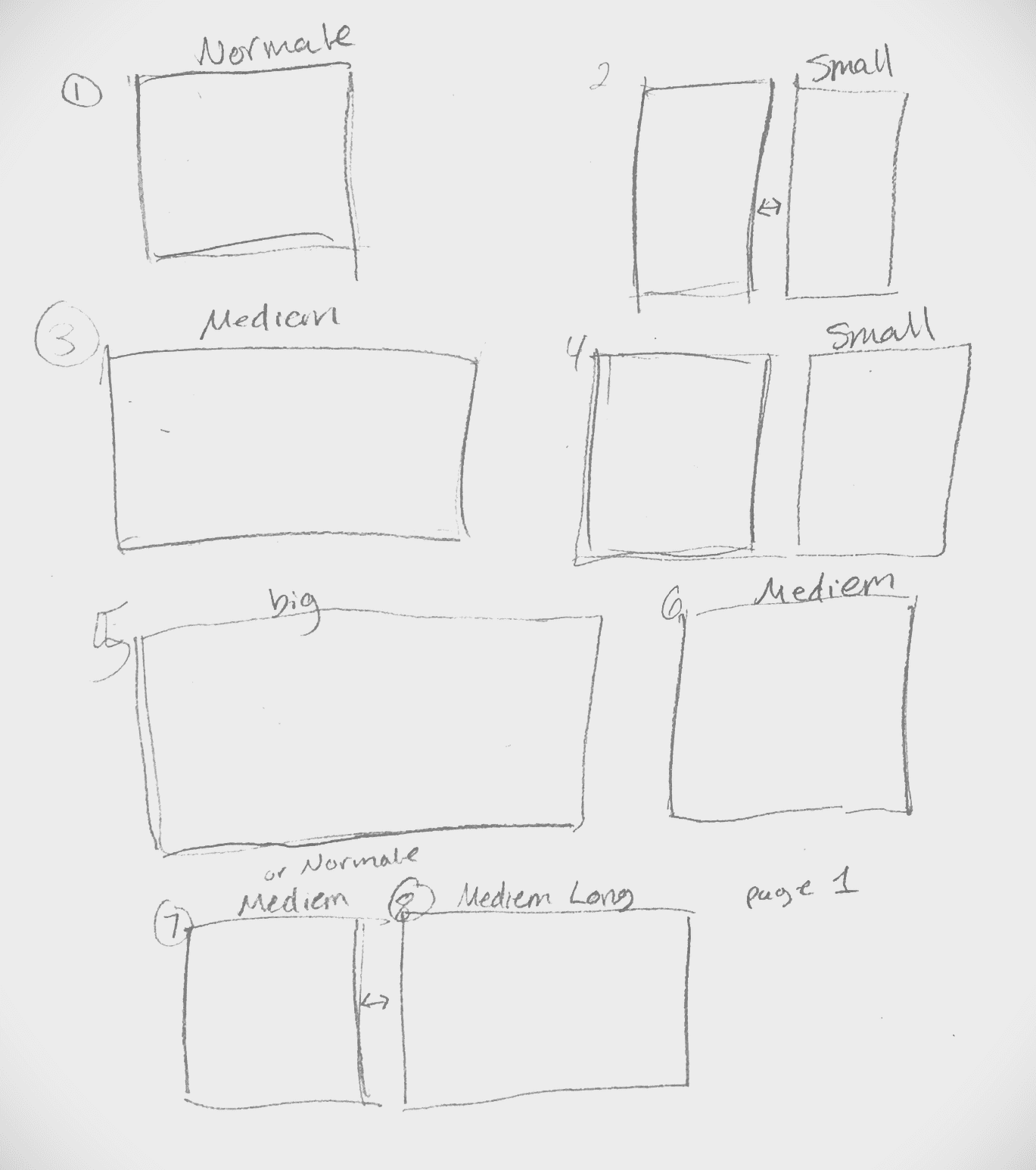
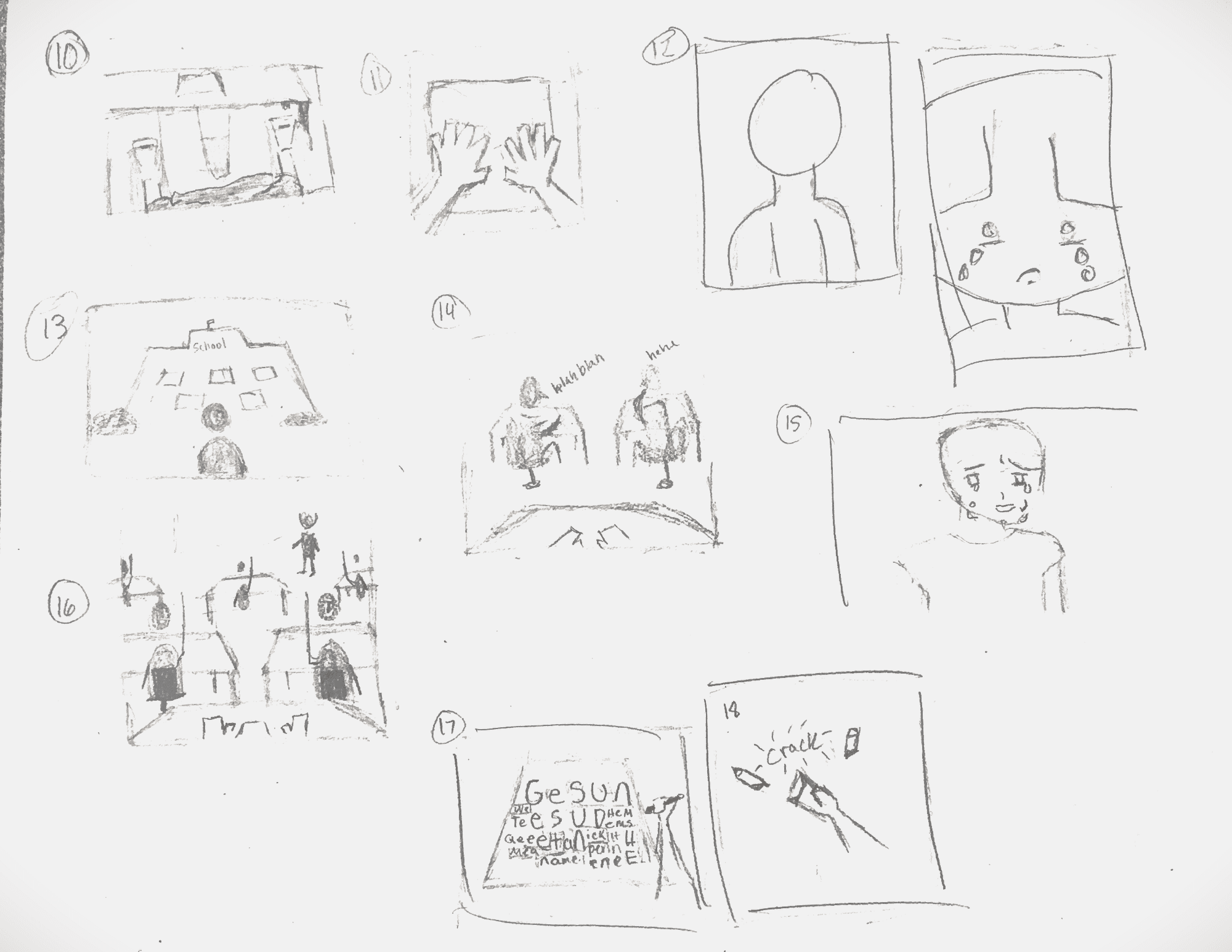
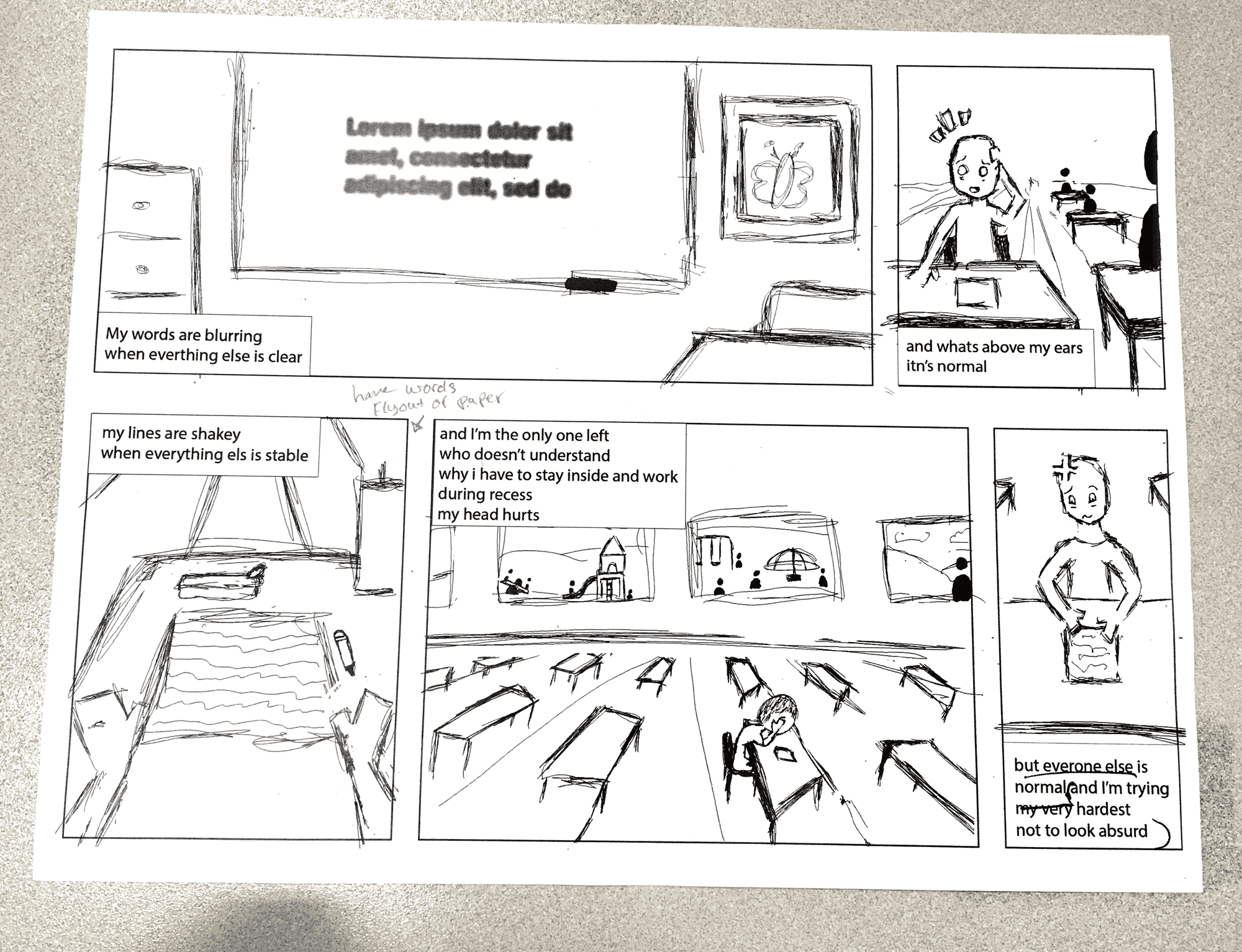
Refined iteration focusing on readability, structure, and visual balance.
The second rough draft focused on refining the visual direction established in the initial concepts. I began developing stronger panel compositions, cleaner typography, and more intentional pacing to improve readability while still maintaining the distorted and emotional qualities of the project. This stage allowed me to further explore the relationship between text and imagery, helping shape a more cohesive visual narrative that balanced experimentation with structure.
.out come
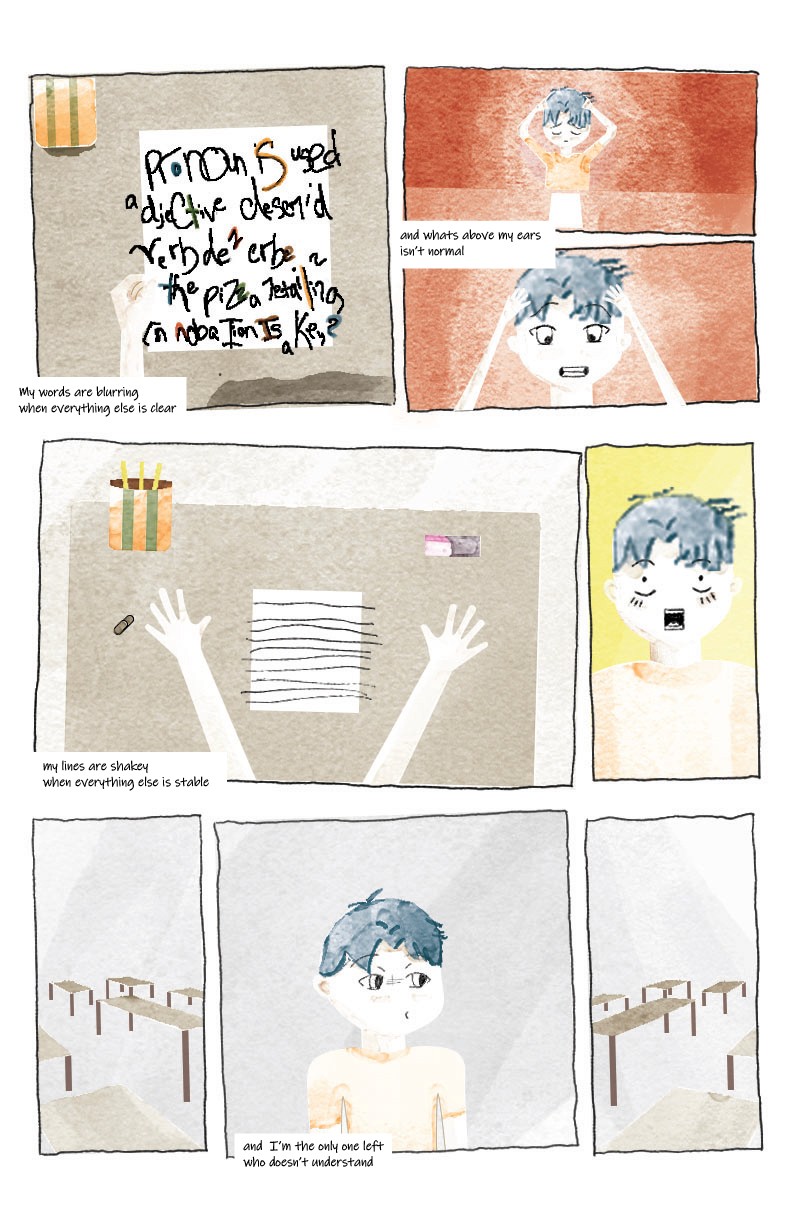
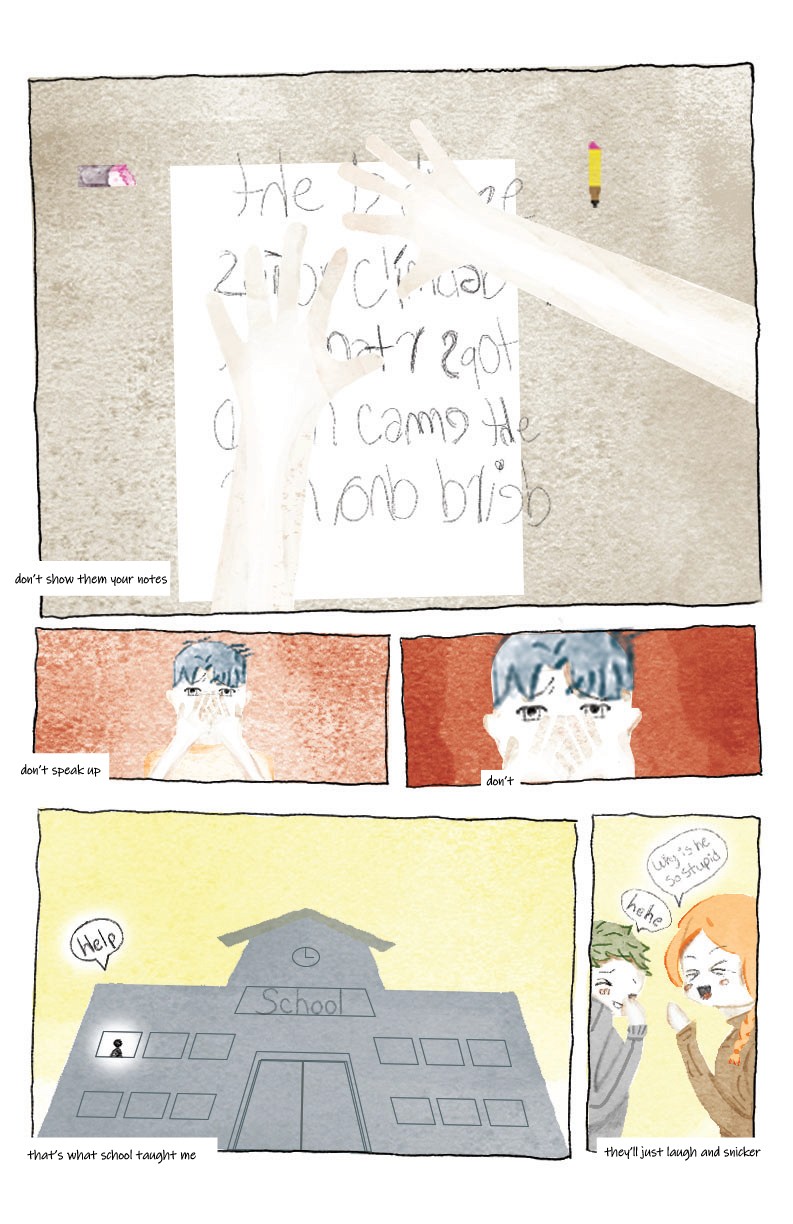
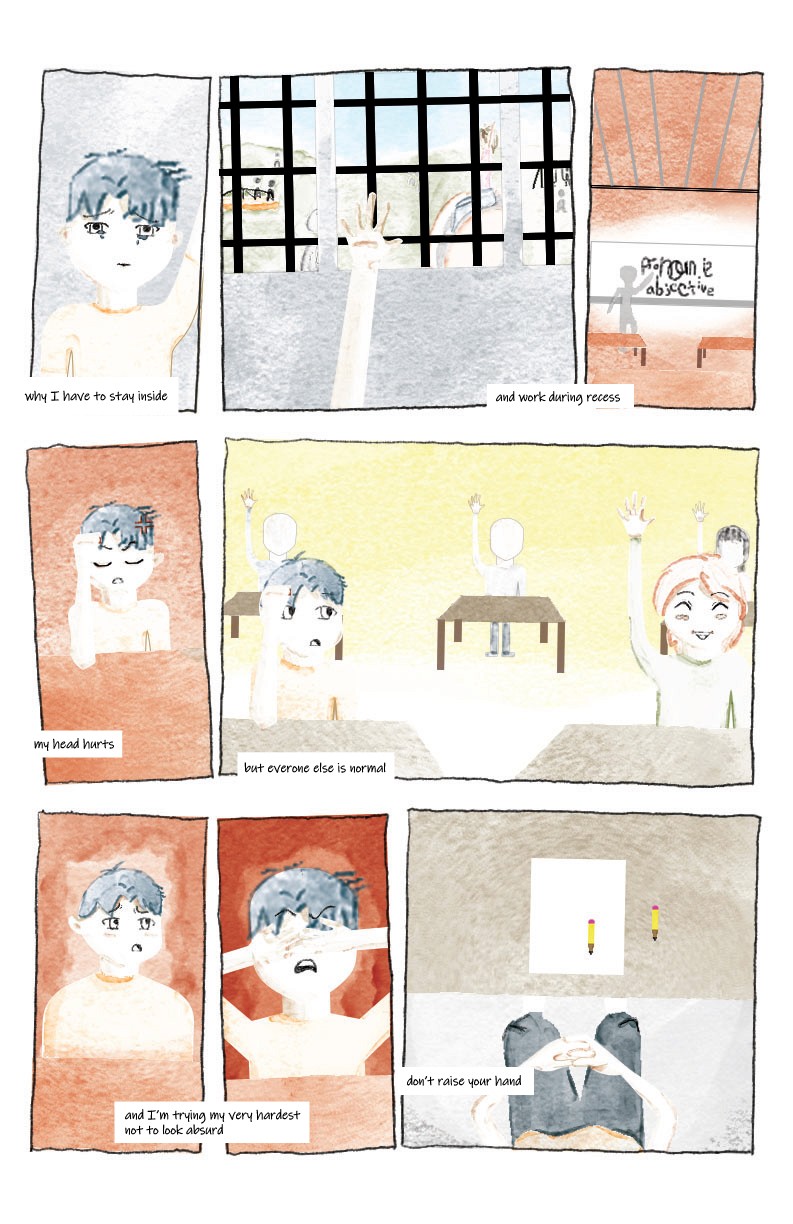
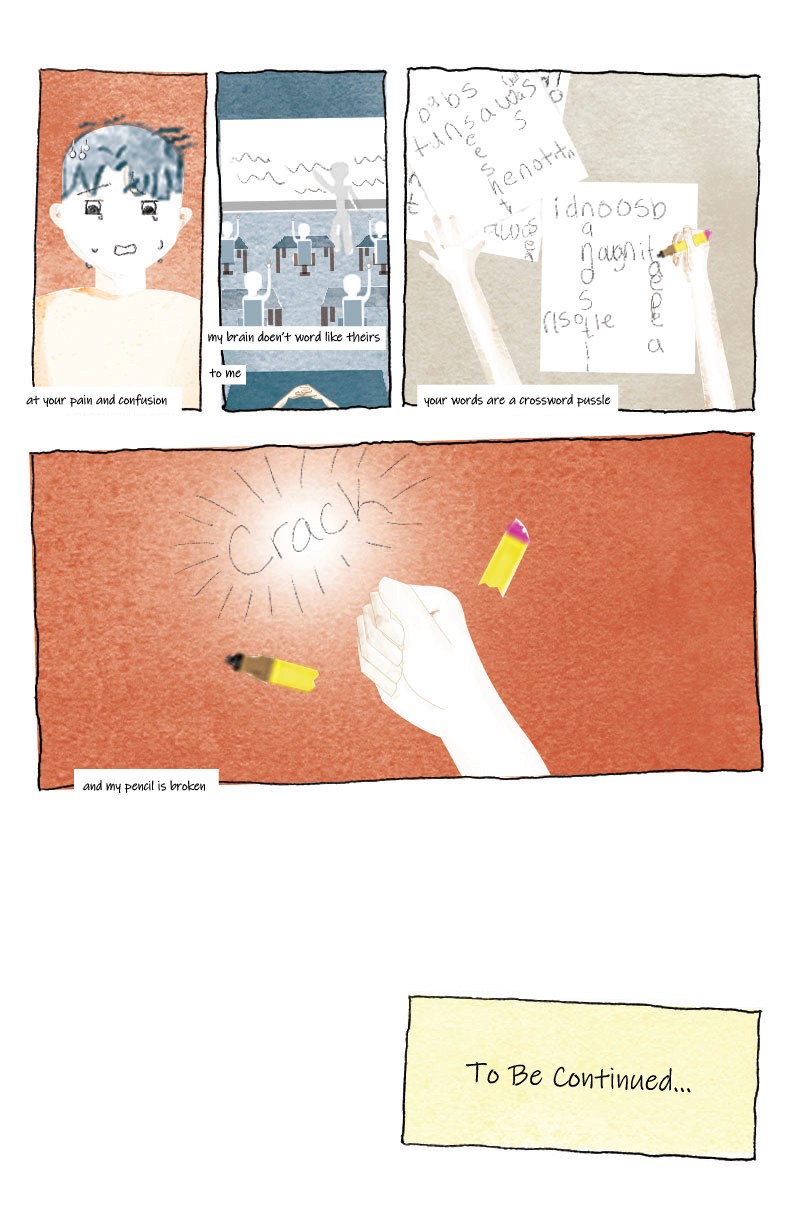
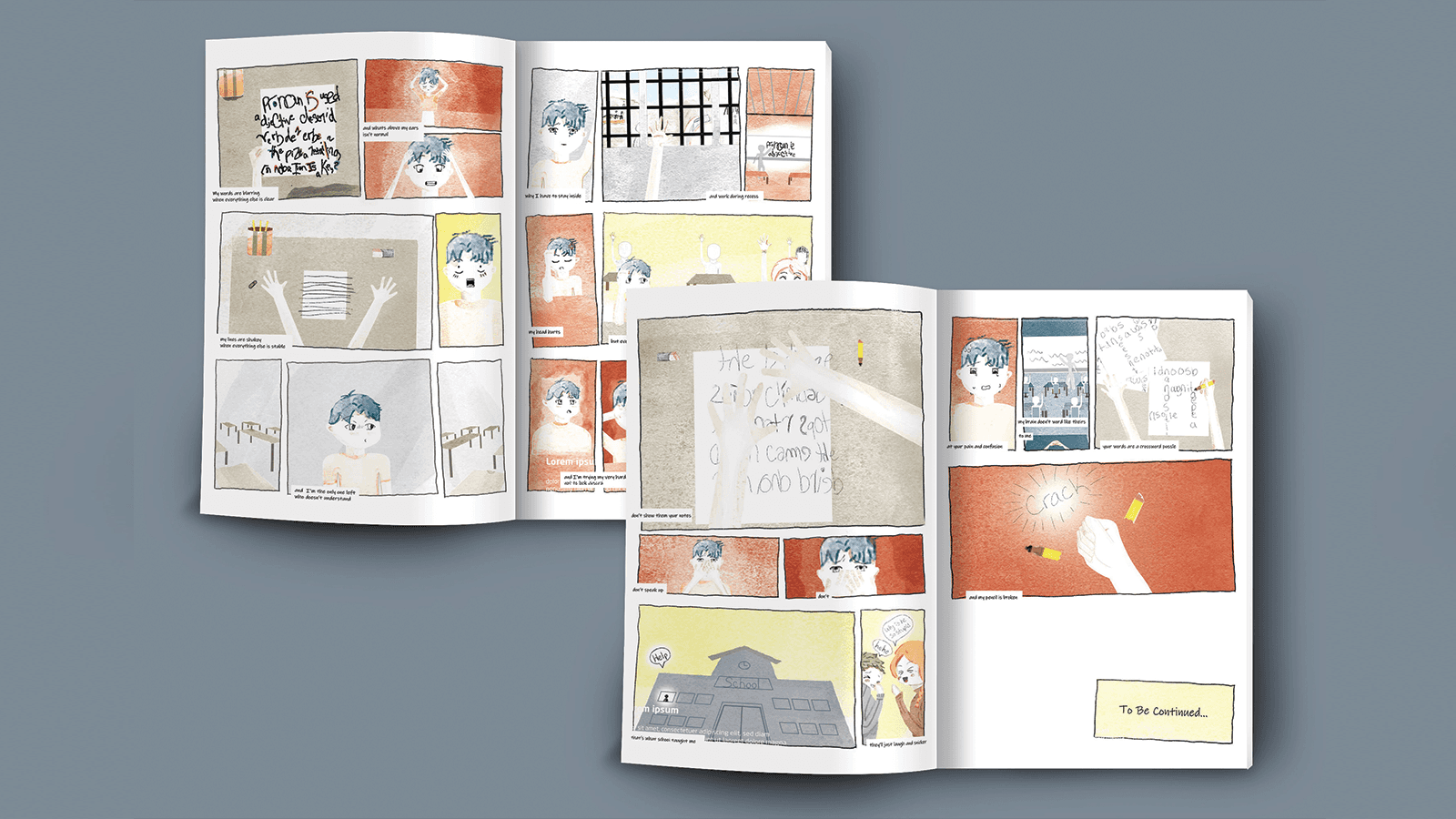
Final comic adaptation visualizing the experience of dyslexia.
This project challenged me to use design as a tool for communication, empathy, and storytelling. By adapting the poem “Dis-lex-e-ah” into a comic book format, I explored how typography, pacing, and illustration could visually represent the struggles associated with dyslexia. The final result became more than a design exercise, it became an opportunity to create understanding through visual experience.
.see also